

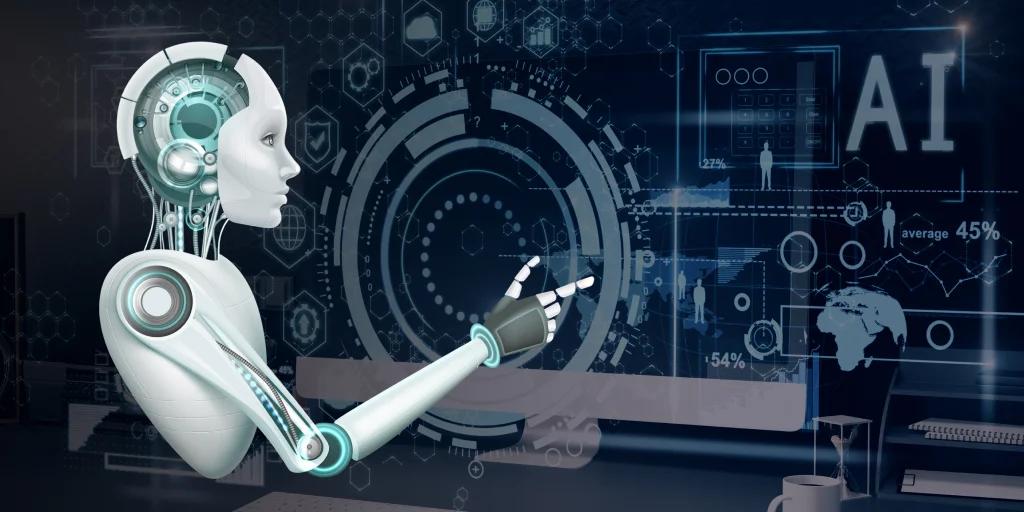
Artificial Intelligence (AI) is no longer a futuristic concept or an abstract technology confined to research labs and Silicon Valley. Instead, it has become an influential and transformative force in the world of work and the marketplace. For learners and professionals as well as organizations, this revolution is no longer on the horizon but has already begun. Upskilling in AI can therefore be considered less as a beneficial option and more as a necessity for the future.

1. AI Is Already Transforming Work at Scale
The first reason AI upskilling is urgent is that AI adoption across industries is no longer experimental—it is mainstream.
Recent data coming out of the workplace has shown that in 2025 the majority of firms are implementing AI. Based on trends for the use of AI in the workplace, 91% of firms are using one or another type of AI solution, while 58% of workers use it on a regular basis.
In addition, the use of AI is extending beyond the tech department. While the initial use of AI was prevalent in technical departments, current use of AI applications has extended to other functions such as marketing, financial, HR, and customer experience functions. As a result of such integrations, professionals across their respective disciplines are experiencing AI every day.
What it creates for them is a reality that if they don’t work in “AI engineering” or “data science,” knowing about AI-related tools and concepts and having analytical skills also directly impacts how they do the job and how they will be considered in the future. To be relevant, one needs to transform from a sporadic user of AI-related tools to someone who understands how AI affects decisions and execution.
2. Demand for AI Skills Is Growing Rapidly
Although adoption is extensive, the labor market is still playing catch-up in terms of the adoption of AI. The demand for AI skills is still exceeding supply in almost all regions and sectors.
Industry forecasts also estimate that nearly a million AI expert human resources are required globally by 2026, but less than half this number of people actually possess AI and machine learning knowledge.
Furthermore, industry jobs that require AI capabilities experience tremendous growth, with job listings that require AI capabilities rising by more than 100 percent year-over-year because of an increasing demand curve.
Findings from job market analytics are also reinforcing this trend. Research from McKinsey found that the demand for AI skills has become so prominent that jobs requiring AI skills have been growing at a pace that is faster than the average, including periods when the overall pace of hiring is slowing down.
In other areas, this is especially the case. For instance, financial services in the UK saw a 12 percent increase in advertised vacancies for jobs related to AI and data in 2025 compared with a drop in conventional administrative roles.
These statistics highlight two important points:
- The jobs related to artificial intelligence are no longer niche; rather, they are increasingly being used as a foundation in every business.
- People with skills related to AI are extremely valuable, and this trend is only intensifying.
Upskilling today places individuals in this position to their advantage, rather than being left behind.
Read: Generative AI Certification and Training Courses by Industry Experts
3. AI Offers a Wage Premium and Career Advantage
The labor market does not treat AI skills equally. Jobs that require AI skills pay higher and offer quick promotion.
According to PwC’s 2025 Global AI Jobs Barometer, there is a 56 percent pay premium in jobs requiring AI skills over a similar job requiring no AI skills. It is clear from such data points that, on average, individuals with AI skills are significantly better paid than individuals with similar skills but lacking AI skills.
This has been supported by academic research: past studies have shown that employees with skills in AI receive a respective 11% payroll premium in the same company and a 5% payroll premium in job titles, again valuing AI skills in the economic market.
This is fueled by market competition. Firms are ready to pay extra for specialists who will assist them in unlocking their gains from AI investments. These gains could come in the form of increased efficiencies, improvements in decision-making processes, or new revenue streams.
What this means, at least in terms of signal, for people trying to learn or redirect, is that there is an economic incentive here in understanding AI.
4. Traditional Education Alone Is Not Enough
One of these factors contributing to the pressing nature of upskilling in AI is related to a lack of correspondence between typical degree courses and future demands of job market employers.
Research into hiring trends worldwide shows that there was a greater growth demand in AI employment than in conventional academic requirements. More emphasis is being placed by employers not on what one studies, i.e., a degree, but on what one can do, i.e., interpret data, understand machine learning basics, engineer prompts, and know AI tools.
This implies that individuals with the skills to actually deliver AI solutions tend to perform better in the market than those who base their expertise solely on academic credentials. In fact, research has shown that in many AI skills, workers with skill proficiency tend to command a salary premium even higher than that of people with academic qualifications.
For higher education providers, this highlights that curriculum development targeting practical AI skills, case study approaches, and project portfolios is crucial. Upskilling in this scenario is more than extra course study; it is a move that identifies with that which is most valued in the current marketplace.
5. AI Disrupts Entry-Level Employment Pathways
Despite the many opportunities that AI presents, it is changing the entry-level jobs in some important ways too. Studies from the job market suggest that the growing workforce, especially the less skilled, is currently struggling to find jobs within sectors that are exposed to AI. Studies from the US, for instance, suggest that the new workforce is receiving fewer job offers from sectors that are significantly exposed to AI than ever before.
This indicates that beginning-level employment is becoming increasingly more competitive and skill-based. Today, job seekers are expected to possess a minimum basic understanding of digital literacy and AI knowledge even when considering beginning-level jobs that were non-tech related previously. Otherwise, new entrants to the industry or professional field of their choice are essentially being weeded out or consigned to dead-end jobs.
Upskilling gives new professionals the skills that employers are only just starting to realize are essential, not just desirable.
6. Organizations Are Investing Heavily in AI and Upskilling
The corporate reaction to AI adoption still highlights the importance of timing.
As indicated in the data regarding transforming the workplace, most employers are not only implementing AI tools but are also working on upskilling programs for their employees.
Approximately 77 percent of the employers are planning on upskilling their employees so that their workforce is able to effectively use AI tools, while 86 percent of the employers believe that AI will change how they operate by the year 2030.
This dual trend—rapid AI integration coupled with investment in workforce development—creates opportunities for learners and professionals. As a result, more and more companies will be offering training programs, partnerships with education providers, and internal certification tracks that keep their teams competitive.
The implication for individuals at work is that upskilling is not only a personal interest but also an organizational strategy. Professionals who take the initiative to upskill position themselves for internal mobility, leadership, and strategic influence.
7. AI Augments Human Work—It Does Not Replace It Entirely
Despite the concerns about the possibility of automation, the reality today appears to show that while artificial intelligence is augmenting the work of humans, it is certainly not fully replacing it either. It has been reported that in most sectors, artificial intelligence performs a rather large number of technical tasks—20 to 40 percent in the tech sector in India—but still needs the intervention of humans.
This adds extra relevance to upskilling in the following ways:
- It reinforces that AI competencies do not make humans obsolete; they make them more effective.
- It highlights that roles requiring human judgment, creativity, leadership, and strategic insight remain essential, even as routine tasks are automated.
- It creates new hybrid roles—such as AI strategist, AI product manager, and AI-enabled business analyst—that combine domain expertise with AI literacy.
The ability to cooperate with AI effectively means maximizing value from automation and adding to unique human advantages.
8. Upskilling Now Offers Long-Term Career Security
Finally, pace is also an essential element. Based on the Labour Market Analysis, "The skills landscape is changing at a speed that is far outpacing what was seen in previous technological revolutions." Skills for AI-exposed jobs change at a rate of 66 percent compared to other jobs. "This is a function of how quickly technologies, platforms, and models are developing."
The pace of technological advancements ensures that reactive learning skills, such as learning by reacting to a clear definition of job requirements, are ineffective. Job security in the era of AI calls for proactive learning of skills.
Upskilling today involves:
- Starting with foundational skills that will serve for many technology cycles.
- Acquiring versatility in order to be able to absorb future progress
- Placing oneself within the context of influencing the use of AI for ethical and strategic reasons and with human insight.
Those who hesitate may end up lagging behind others who have already adopted AI literacy skills.
Read Also: Agentic AI Certification and Training Courses by Industry Experts
Conclusion: The Momentum Is Here—and It Will Only Accelerate
From corporate strategy to labor market dynamics, from compensation patterns to job descriptions, the impact of AI on work is palpable and quantifiable. AI skills are no longer a nice-to-have add-on but are increasingly core to how business value is created and how careers are built.
For the learner, professional, and leader, the following represents a uniquely advantageous moment in the development of AI upskilling: Tools are mature, demand is strong, and education has evolved to support practical, career-aligned learning. Evidence suggests that those who pick up AI competencies now will be more than relevant; they'll lead the future of work.
Upskilling in AI today is not a matter of keeping up with the times; it is a matter of proactively positioning oneself for a future where human intelligence and artificial intelligence work together to solve the most complex problems of the world.

Priyank Jha
Priyank is a Senior Content Developer and Strategist at SNVA Veranda. Earlier, he worked as a data scientist, where he gained extensive experience in developing data-driven solutions, advanced analytics, and strategic decision-making processes. His expertise includes data analysis, business intelligence, and implementing data-centric strategies that drive organizational growth and innovation. In addition to his data science experience, Priyank has over 10 years of experience in the banking and financial services sector. He has worked across various roles and operational levels, gaining in-depth knowledge of financial operations, customer service management, and business processes.
Learn how we research, review, and update our content. Editorial Standards & Review Process.

Latest Blogs
8 PhD in Business Careers: Academic and Industry Paths After Graduation (2026 Guide)
 Is an Online DBA Worth It? Salary, ROI, and Career Benefits (2026 Guide)
 PhD vs DBA: Which Doctorate Is Right for You? (2026 Complete Guide)
 How to Compare Online DBA Programs: A Step-by-Step Guide Before You Apply
  Doctor of Business Administration Careers: Jobs, Salary & Growth in 2026
 Why Does a DBA Make More Sense Than a PhD?
 DBA vs PhD: Which Doctoral Degree Holds Higher Academic Value?
 Online DBA Degree Explained: Curriculum, Admission, and Career Opportunities (2026 Guide)
Featured Courses


Artificial Intelligence (AI) is no longer a futuristic concept or an abstract technology confined to research labs and Silicon Valley. Instead, it has become an influential and transformative force in the world of work and the marketplace. For learners and professionals as well as organizations, this revolution is no longer on the horizon but has already begun. Upskilling in AI can therefore be considered less as a beneficial option and more as a necessity for the future.
1. AI Is Already Transforming Work at Scale
The first reason AI upskilling is urgent is that AI adoption across industries is no longer experimental—it is mainstream.
Recent data coming out of the workplace has shown that in 2025 the majority of firms are implementing AI. Based on trends for the use of AI in the workplace, 91% of firms are using one or another type of AI solution, while 58% of workers use it on a regular basis.
In addition, the use of AI is extending beyond the tech department. While the initial use of AI was prevalent in technical departments, current use of AI applications has extended to other functions such as marketing, financial, HR, and customer experience functions. As a result of such integrations, professionals across their respective disciplines are experiencing AI every day.
What it creates for them is a reality that if they don’t work in “AI engineering” or “data science,” knowing about AI-related tools and concepts and having analytical skills also directly impacts how they do the job and how they will be considered in the future. To be relevant, one needs to transform from a sporadic user of AI-related tools to someone who understands how AI affects decisions and execution.
2. Demand for AI Skills Is Growing Rapidly
Although adoption is extensive, the labor market is still playing catch-up in terms of the adoption of AI. The demand for AI skills is still exceeding supply in almost all regions and sectors.
Industry forecasts also estimate that nearly a million AI expert human resources are required globally by 2026, but less than half this number of people actually possess AI and machine learning knowledge.
Furthermore, industry jobs that require AI capabilities experience tremendous growth, with job listings that require AI capabilities rising by more than 100 percent year-over-year because of an increasing demand curve.
Findings from job market analytics are also reinforcing this trend. Research from McKinsey found that the demand for AI skills has become so prominent that jobs requiring AI skills have been growing at a pace that is faster than the average, including periods when the overall pace of hiring is slowing down.
In other areas, this is especially the case. For instance, financial services in the UK saw a 12 percent increase in advertised vacancies for jobs related to AI and data in 2025 compared with a drop in conventional administrative roles.
These statistics highlight two important points:
- The jobs related to artificial intelligence are no longer niche; rather, they are increasingly being used as a foundation in every business.
- People with skills related to AI are extremely valuable, and this trend is only intensifying.
Upskilling today places individuals in this position to their advantage, rather than being left behind.
Read: Generative AI Certification and Training Courses by Industry Experts
3. AI Offers a Wage Premium and Career Advantage
The labor market does not treat AI skills equally. Jobs that require AI skills pay higher and offer quick promotion.
According to PwC’s 2025 Global AI Jobs Barometer, there is a 56 percent pay premium in jobs requiring AI skills over a similar job requiring no AI skills. It is clear from such data points that, on average, individuals with AI skills are significantly better paid than individuals with similar skills but lacking AI skills.
This has been supported by academic research: past studies have shown that employees with skills in AI receive a respective 11% payroll premium in the same company and a 5% payroll premium in job titles, again valuing AI skills in the economic market.
This is fueled by market competition. Firms are ready to pay extra for specialists who will assist them in unlocking their gains from AI investments. These gains could come in the form of increased efficiencies, improvements in decision-making processes, or new revenue streams.
What this means, at least in terms of signal, for people trying to learn or redirect, is that there is an economic incentive here in understanding AI.
4. Traditional Education Alone Is Not Enough
One of these factors contributing to the pressing nature of upskilling in AI is related to a lack of correspondence between typical degree courses and future demands of job market employers.
Research into hiring trends worldwide shows that there was a greater growth demand in AI employment than in conventional academic requirements. More emphasis is being placed by employers not on what one studies, i.e., a degree, but on what one can do, i.e., interpret data, understand machine learning basics, engineer prompts, and know AI tools.
This implies that individuals with the skills to actually deliver AI solutions tend to perform better in the market than those who base their expertise solely on academic credentials. In fact, research has shown that in many AI skills, workers with skill proficiency tend to command a salary premium even higher than that of people with academic qualifications.
For higher education providers, this highlights that curriculum development targeting practical AI skills, case study approaches, and project portfolios is crucial. Upskilling in this scenario is more than extra course study; it is a move that identifies with that which is most valued in the current marketplace.
5. AI Disrupts Entry-Level Employment Pathways
Despite the many opportunities that AI presents, it is changing the entry-level jobs in some important ways too. Studies from the job market suggest that the growing workforce, especially the less skilled, is currently struggling to find jobs within sectors that are exposed to AI. Studies from the US, for instance, suggest that the new workforce is receiving fewer job offers from sectors that are significantly exposed to AI than ever before.
This indicates that beginning-level employment is becoming increasingly more competitive and skill-based. Today, job seekers are expected to possess a minimum basic understanding of digital literacy and AI knowledge even when considering beginning-level jobs that were non-tech related previously. Otherwise, new entrants to the industry or professional field of their choice are essentially being weeded out or consigned to dead-end jobs.
Upskilling gives new professionals the skills that employers are only just starting to realize are essential, not just desirable.
6. Organizations Are Investing Heavily in AI and Upskilling
The corporate reaction to AI adoption still highlights the importance of timing.
As indicated in the data regarding transforming the workplace, most employers are not only implementing AI tools but are also working on upskilling programs for their employees.
Approximately 77 percent of the employers are planning on upskilling their employees so that their workforce is able to effectively use AI tools, while 86 percent of the employers believe that AI will change how they operate by the year 2030.
This dual trend—rapid AI integration coupled with investment in workforce development—creates opportunities for learners and professionals. As a result, more and more companies will be offering training programs, partnerships with education providers, and internal certification tracks that keep their teams competitive.
The implication for individuals at work is that upskilling is not only a personal interest but also an organizational strategy. Professionals who take the initiative to upskill position themselves for internal mobility, leadership, and strategic influence.
7. AI Augments Human Work—It Does Not Replace It Entirely
Despite the concerns about the possibility of automation, the reality today appears to show that while artificial intelligence is augmenting the work of humans, it is certainly not fully replacing it either. It has been reported that in most sectors, artificial intelligence performs a rather large number of technical tasks—20 to 40 percent in the tech sector in India—but still needs the intervention of humans.
This adds extra relevance to upskilling in the following ways:
- It reinforces that AI competencies do not make humans obsolete; they make them more effective.
- It highlights that roles requiring human judgment, creativity, leadership, and strategic insight remain essential, even as routine tasks are automated.
- It creates new hybrid roles—such as AI strategist, AI product manager, and AI-enabled business analyst—that combine domain expertise with AI literacy.
The ability to cooperate with AI effectively means maximizing value from automation and adding to unique human advantages.
8. Upskilling Now Offers Long-Term Career Security
Finally, pace is also an essential element. Based on the Labour Market Analysis, "The skills landscape is changing at a speed that is far outpacing what was seen in previous technological revolutions." Skills for AI-exposed jobs change at a rate of 66 percent compared to other jobs. "This is a function of how quickly technologies, platforms, and models are developing."
The pace of technological advancements ensures that reactive learning skills, such as learning by reacting to a clear definition of job requirements, are ineffective. Job security in the era of AI calls for proactive learning of skills.
Upskilling today involves:
- Starting with foundational skills that will serve for many technology cycles.
- Acquiring versatility in order to be able to absorb future progress
- Placing oneself within the context of influencing the use of AI for ethical and strategic reasons and with human insight.
Those who hesitate may end up lagging behind others who have already adopted AI literacy skills.
Read Also: Agentic AI Certification and Training Courses by Industry Experts
Conclusion: The Momentum Is Here—and It Will Only Accelerate
From corporate strategy to labor market dynamics, from compensation patterns to job descriptions, the impact of AI on work is palpable and quantifiable. AI skills are no longer a nice-to-have add-on but are increasingly core to how business value is created and how careers are built.
For the learner, professional, and leader, the following represents a uniquely advantageous moment in the development of AI upskilling: Tools are mature, demand is strong, and education has evolved to support practical, career-aligned learning. Evidence suggests that those who pick up AI competencies now will be more than relevant; they'll lead the future of work.
Upskilling in AI today is not a matter of keeping up with the times; it is a matter of proactively positioning oneself for a future where human intelligence and artificial intelligence work together to solve the most complex problems of the world.
Latest Blogs
8- PhD in Business Careers: Academic and Industry Paths After Graduation (2026 Guide)
- Is an Online DBA Worth It? Salary, ROI, and Career Benefits (2026 Guide)
- PhD vs DBA: Which Doctorate Is Right for You? (2026 Complete Guide)
- How to Compare Online DBA Programs: A Step-by-Step Guide Before You Apply
- Doctor of Business Administration Careers: Jobs, Salary & Growth in 2026
- Why Does a DBA Make More Sense Than a PhD?
- DBA vs PhD: Which Doctoral Degree Holds Higher Academic Value?
- Online DBA Degree Explained: Curriculum, Admission, and Career Opportunities (2026 Guide)
Priyank Jha
Priyank is a Senior Content Developer and Strategist at SNVA Veranda. Earlier, he worked as a data scientist, where he gained extensive experience in developing data-driven solutions, advanced analytics, and strategic decision-making processes. His expertise includes data analysis, business intelligence, and implementing data-centric strategies that drive organizational growth and innovation. In addition to his data science experience, Priyank has over 10 years of experience in the banking and financial services sector. He has worked across various roles and operational levels, gaining in-depth knowledge of financial operations, customer service management, and business processes.
Learn how we research, review, and update our content. Editorial Standards & Review Process.