

Healthcare systems across the United States continue to operate under rising patient volumes, while the available nursing workforce does not grow at the same pace. Now this is creating an imbalance, consistent pressure on hospitals, outpatient centers, and home care providers.
Two major factors define nursing demand in 2026:
First, the aging population increases the need for continuous medical care across chronic and age-related conditions.
Second, the nursing shortage in the USA creates staffing gaps as experienced professionals exit the workforce at a faster rate than new professionals enter.
That's the reason hospitals and healthcare organizations are expanding recruitment efforts across entry-level and specialized nursing roles to maintain patient care standards. This shift positions nursing as one of the most actively hiring professions in the healthcare sector in 2026.
How the Aging Population Healthcare Demand is Creating New Nursing Opportunities
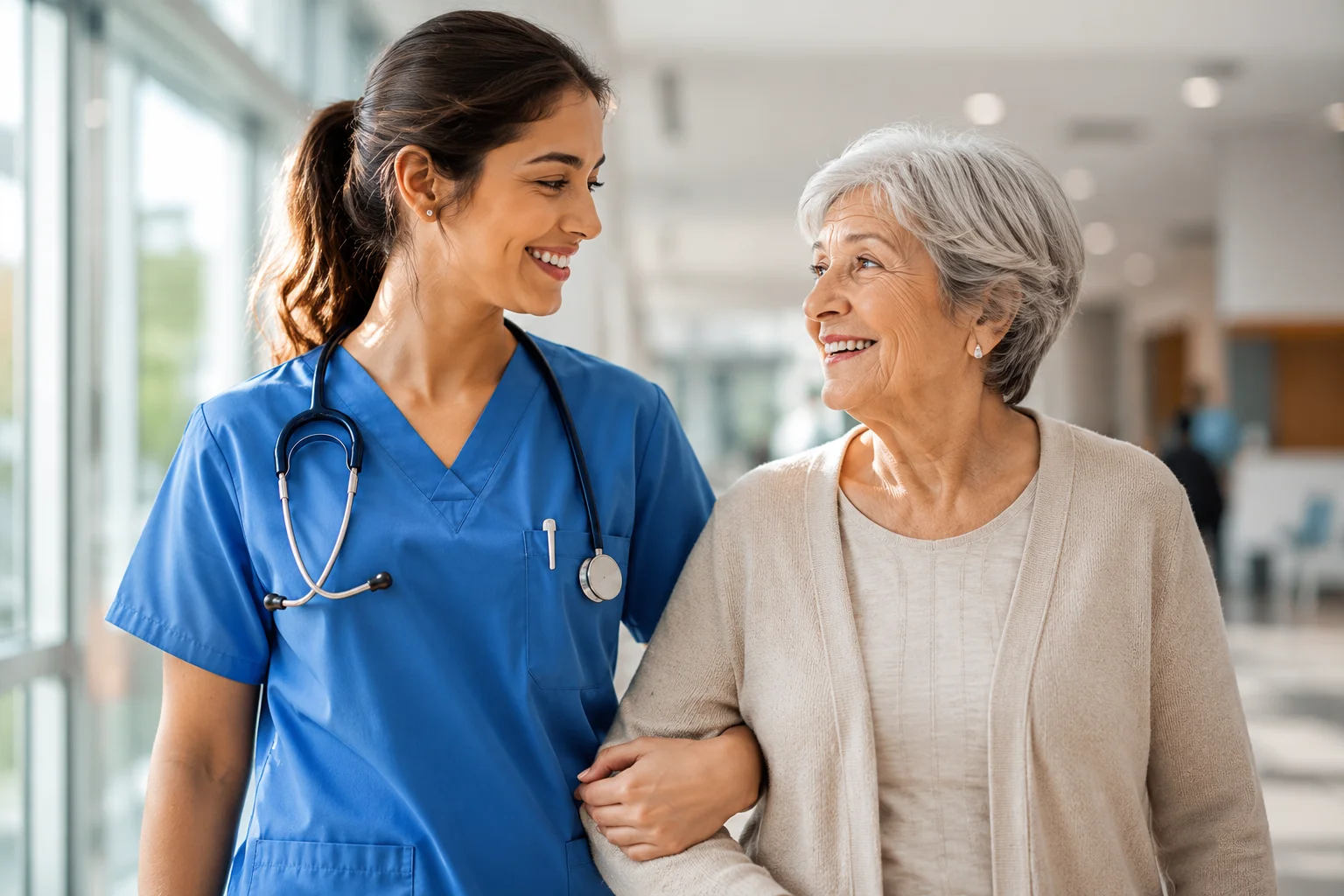
The United States is experiencing a major demographic shift as the number of adults aged 65 and older continues to grow. According to U.S. Census projections, it has been reported that older adults will account for a larger share of the population over the coming decades, increasing the need for ongoing healthcare services across communities.
Rising Elderly Population: It has been observed that people are living longer than previous generations, creating greater demand for healthcare support during later stages of life. As this is natural, they will require more specialized healthcare support like medical appointments, preventive screenings, medication management, and recovery support after illness or surgery. Due to this, providers need more nursing professionals who can provide care services across hospitals, rehabilitation centers, and community settings.
Chronic Disease Management Requires Ongoing Nursing Support: It is common that many older adults live with one or more chronic health conditions that require continuous lifetime management. Common conditions include:
Diabetes
Heart disease
Hypertension
Chronic respiratory disorders
Arthritis
Nurses play a central role in managing these conditions by monitoring symptoms, educating patients, coordinating treatment plans, and helping individuals maintain their quality of life.
Shift Toward Extended Care Support: Few older adults require support beyond traditional medical treatment. Assisted living communities, rehabilitation centers, and home-based care programs now play a larger role in the healthcare system.
As demand for these services grows, healthcare employers continue expanding nursing positions focused on long-term patient support and care coordination.
Nursing Shortage in the USA and the Growing Workforce Gap
The demand for nurses in 2026 is not single-handedly because of patient needs, but it also faces a shrinking workforce, making recruitment one of their highest operational priorities.
Retirement is reshaping healthcare staffing: Healthcare systems rely on experienced nurses who have spent decades building clinical expertise. As these professionals retire, employers lose valuable institutional knowledge and leadership within care teams.
As retirement rates increase, employers must recruit new talent to maintain staffing levels and support continuity of care.
Burnout continues to influence workforce stability: Nursing remains a rewarding profession, but many care environments involve physical and emotional demands that contribute to turnover. High-pressure departments like ICUs, EDUs, and trauma centers face challenges related to:
Staffing ratios
Shift coverage
Patient acuity levels
Workplace stress
When nurses leave these environments, healthcare organizations must increase recruitment efforts to maintain staffing levels.
Nursing Education cannot fill open positions fast enough: While nursing programs continue to graduate new professionals each year, workforce demand exceeds the number of nurses entering the field. Factors affecting the training pipeline are as follows:
Limited faculty availability
Competitive program admissions
Clinical placement constraints
Growing employer demand
As a result, healthcare systems continue recruiting aggressively to address open positions.
Hiring Gap Snapshot
Workforce Factor | Impact on healthcare employers |
Retiring nurses | Loss of experienced staff |
Burnout-related exists | Increased turnover |
Growing patient volumes | More open positions |
Limited graduate supply | Slower workforce replacement |
For aspiring nurses, the workforce gap creates favorable employment conditions. Healthcare organizations continue seeking professionals across entry-level, specialized, and leadership positions, making nursing one of the most sought-after careers in healthcare.
Home Health Nursing Jobs 2026 and the Expansion of Community-Based Care
Healthcare is different today than it was a decade ago. Events such as the COVID-19 pandemic accelerated changes that were already underway, encouraging healthcare providers to rethink where and how patients receive care.
Patients today have more options regarding where they receive care. They prefer treatment plans that allow them to recover at home while maintaining access to professional medical support. Healthcare organizations continue adapting services to meet these expectations, creating new opportunities for nurses outside inpatient hospital environments.
Home Healthcare becomes a larger part of treatment plans as organizations are now using visiting nurse services to support recovery and monitor patient progress.
Outpatient Services Continue to Grow as hospitals are upgrading their technology. Surgical techniques support shorter recovery periods and same-day discharge. In previous decades, patients remained hospitalized for longer periods following procedures or illness. Today, healthcare providers focus on reducing unnecessary inpatient stays while maintaining continuity of care. As a result, outpatient nursing careers continue expanding across specialties such as surgery, orthopedics, cardiology, and rehabilitation.
The future nursing workforce will not be limited to hospitals. Students entering nursing today can choose from a wider variety of career paths than previous generations. Home healthcare and outpatient care offer alternatives for those who enjoy building long-term patient relationships and working outside traditional hospital settings.
Nursing Technology Trends and Mental Health Nursing Careers in 2026
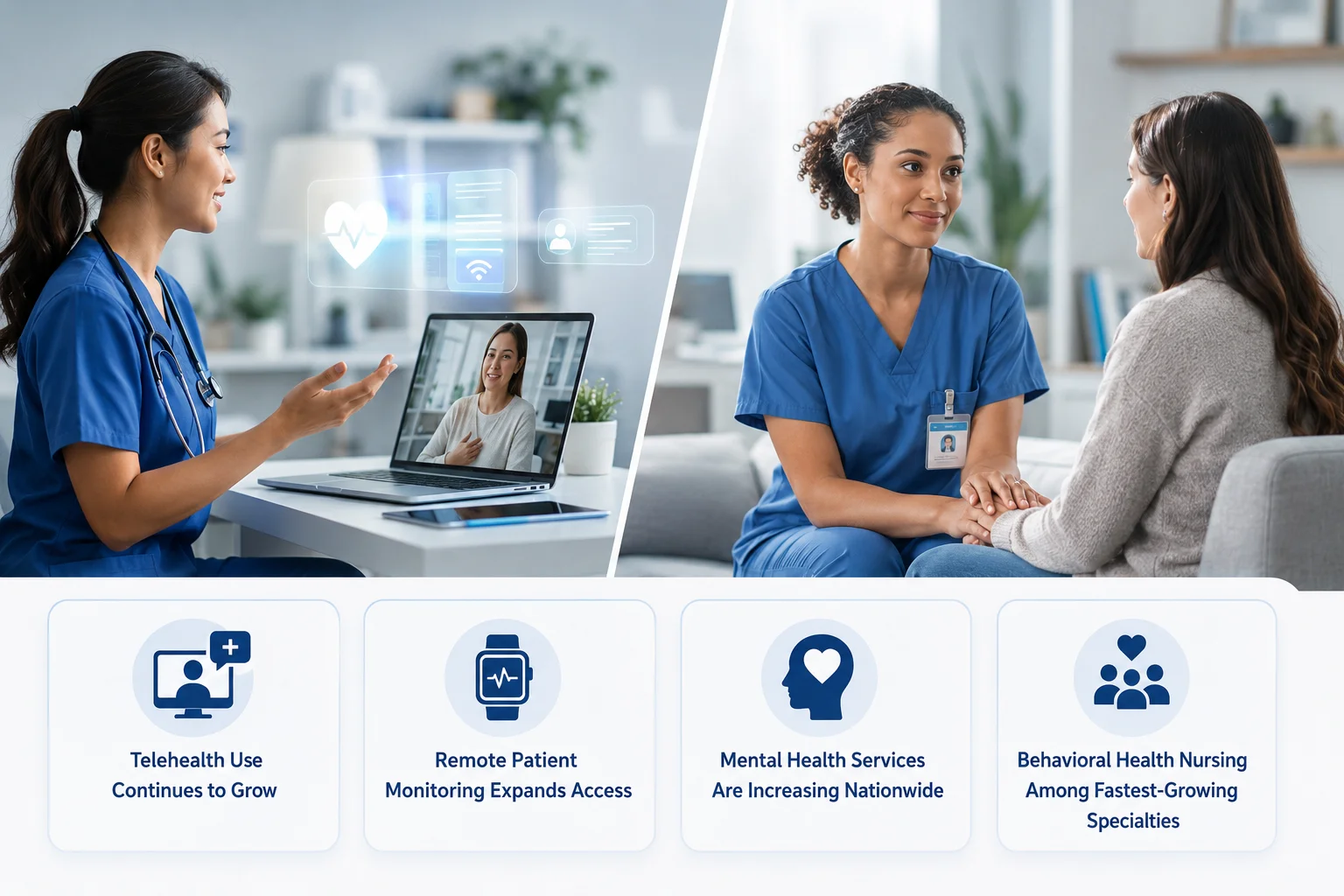
Two areas: Technology-enabled care and mental health support.
Together, they are creating new career opportunities for nurses across hospitals, clinics, virtual care platforms, and community health programs.
1. Telehealth is expanding nursing responsibilities
The rapid adoption of telehealth during the COVID-19 pandemic changed how many patients access healthcare services. What began as a necessity during a public health emergency has become a permanent part of healthcare delivery.
Today, nurses participate in virtual appointments, patient education sessions, follow-up consultations, and care coordination through secure digital platforms. Due to these, telehealth nursing jobs 2026 in healthcare are improving and gaining access in underserved communities.
2. Remote Monitoring Supports Continuous Patient Care
Healthcare providers are now using connected devices that allow patients to share health information without visiting a medical facility. Wearable technology and home monitoring equipment can track vital signs, blood pressure, oxygen levels, and other health indicators.
Nurses review this information, identify potential concerns, and coordinate interventions when needed. This way, healthcare teams maintain regular oversight while reducing unnecessary clinic visits.
3. Digital Systems Are Transforming Daily Nursing Workflows
Technology now plays a central role in how nurses document care, access patient records, update treatment plans, and communicate with healthcare teams. Many healthcare organizations are also using tools that help nurses complete documentation more quickly. These systems reduce paperwork and allow nurses to spend more time focusing on patient care.
4. Mental Health Services Continue to Expand
Mental health has become a major focus across the healthcare system. Now people want support for conditions such as anxiety, depression, stress-related disorders, and substance use issues.
Healthcare providers are expanding behavioral health services
Telehealth has improved access to care
Communities are investing in mental health programs
More employers now offer mental health benefits
Because of these changes, mental health nursing has become one of the fastest-growing nursing specialities.
Skills Nurses Need in Technology-Driven Healthcare in 2026
Technology will continue to play a larger role in healthcare, but patients will always need skilled nurses. Employers are looking for nurses who can combine clinical knowledge with technology skills.
Skill Area | How it works in Modern Nursing |
Telehealth Platforms | Nurses conduct virtual consultations, follow-up appointments, and patient education sessions through secure online systems. |
Electronic Health Records (EHRs) | Healthcare organizations rely on digital patient records to document care, track treatment plans, and share information across care teams. |
Remote Patient Monitoring | Nurses review health data collected through wearable devices and home monitoring equipment to identify potential concerns early. |
Online Communication | Many patient interactions now occur through patient portals, video calls, and digital messaging systems, making virtual communication skills increasingly important. |
Mental Health Assessment | Nurses across different specialties may encounter patients experiencing anxiety, depression, stress-related conditions, or other behavioral health concerns. |
Patient Education and Support | Nurses help patients understand treatment plans, medications, technology tools, and self-care practices that support better health outcomes. |
For future nurses, learning how to use healthcare technology while building strong patient care skills can create opportunities in some of the fastest-growing areas of the profession.
Best Nursing Specialties in 2026: Demand, Work Settings, and Salary Outlook
Different nursing specialties offer unique work environments, responsibilities, and earning potential. The table below compares some of the most in-demand nursing specialties in 2026.
Nursing Specialty | Demand Level in 2026 | Common Work Settings | Main Responsibilities | Average Annual Salary (U.S.) |
ICU / Critical Care Nursing | Very High | Hospitals, trauma centers, critical care units | Monitor critically ill patients, manage life-support equipment, respond to medical emergencies | $90,900 average salary (Salary.com) |
Emergency Department Nursing | Very High | Emergency rooms, trauma centers | Assess urgent cases, stabilize patients, coordinate emergency treatment | $84,674 average salary (Salary.com) |
Operating Room Nursing | High | Hospitals, surgical centers | Assist surgical teams, prepare patients, maintain patient safety during procedures | $95,000–$110,000 estimated range (Glassdoor, PayScale) |
Oncology Nursing | High | Cancer centers, hospitals, specialty clinics | Administer treatments, monitor side effects, educate patients | $90,000–$105,000 estimated range (Glassdoor, Indeed) |
Home Health Nursing | High | Patient homes, community health agencies | Conduct home visits, monitor recovery, coordinate care plans | $80,000–$95,000 estimated range (Indeed, PayScale) |
Hospice Nursing | High | Hospice organizations, hospitals, patient homes | Manage comfort care and support patients and families | $80,000–$98,000+ (Indeed, Salary.com) |
Pediatric Nursing | Moderate to High | Children's hospitals, pediatric clinics, schools | Care for infants, children, and adolescents | $82,000–$95,000+ (Indeed, PayScale) |
Mental Health Nursing | Very High | Behavioral health units, community clinics, telehealth platforms | Conduct assessments, support treatment plans, assist with crisis intervention | $85,000–$100,000+ (Glassdoor, Indeed) |
Note: Salary figures are based on publicly available compensation data from Salary.com, Glassdoor, Indeed, and PayScale. Actual earnings vary based on location, experience, certifications, employer type, and shift differentials.

Rizwana Khan
Philosophy Master’s graduate, AI-certified professional, and content strategist with strong expertise in storytelling, audience psychology, and AI-assisted communication. Rizwana Khan specializes in prompt engineering, SEO content, thought leadership, and brand communication that feels natural, engaging, and audience-focused. Currently working as a Senior Content Executive at SNVA Veranda, she creates compelling content across artificial intelligence, humanities, data analytics, and emerging technology topics. Known for turning complicated ideas into relatable narratives, Rizwana combines creativity, strategy, and modern AI tools to build content that informs, connects, and performs.
Learn how we research, review, and update our content. Editorial Standards & Review Process.

Latest Blogs
8 PhD in Business Careers: Academic and Industry Paths After Graduation (2026 Guide)
 Is an Online DBA Worth It? Salary, ROI, and Career Benefits (2026 Guide)
 PhD vs DBA: Which Doctorate Is Right for You? (2026 Complete Guide)
 How to Compare Online DBA Programs: A Step-by-Step Guide Before You Apply
  Doctor of Business Administration Careers: Jobs, Salary & Growth in 2026
 Why Does a DBA Make More Sense Than a PhD?
 DBA vs PhD: Which Doctoral Degree Holds Higher Academic Value?
 Online DBA Degree Explained: Curriculum, Admission, and Career Opportunities (2026 Guide)
Healthcare systems across the United States continue to operate under rising patient volumes, while the available nursing workforce does not grow at the same pace. Now this is creating an imbalance, consistent pressure on hospitals, outpatient centers, and home care providers.
Two major factors define nursing demand in 2026:
First, the aging population increases the need for continuous medical care across chronic and age-related conditions.
Second, the nursing shortage in the USA creates staffing gaps as experienced professionals exit the workforce at a faster rate than new professionals enter.
That's the reason hospitals and healthcare organizations are expanding recruitment efforts across entry-level and specialized nursing roles to maintain patient care standards. This shift positions nursing as one of the most actively hiring professions in the healthcare sector in 2026.
How the Aging Population Healthcare Demand is Creating New Nursing Opportunities
The United States is experiencing a major demographic shift as the number of adults aged 65 and older continues to grow. According to U.S. Census projections, it has been reported that older adults will account for a larger share of the population over the coming decades, increasing the need for ongoing healthcare services across communities.
Rising Elderly Population: It has been observed that people are living longer than previous generations, creating greater demand for healthcare support during later stages of life. As this is natural, they will require more specialized healthcare support like medical appointments, preventive screenings, medication management, and recovery support after illness or surgery. Due to this, providers need more nursing professionals who can provide care services across hospitals, rehabilitation centers, and community settings.
Chronic Disease Management Requires Ongoing Nursing Support: It is common that many older adults live with one or more chronic health conditions that require continuous lifetime management. Common conditions include:
Diabetes
Heart disease
Hypertension
Chronic respiratory disorders
Arthritis
Nurses play a central role in managing these conditions by monitoring symptoms, educating patients, coordinating treatment plans, and helping individuals maintain their quality of life.
Shift Toward Extended Care Support: Few older adults require support beyond traditional medical treatment. Assisted living communities, rehabilitation centers, and home-based care programs now play a larger role in the healthcare system.
As demand for these services grows, healthcare employers continue expanding nursing positions focused on long-term patient support and care coordination.
Nursing Shortage in the USA and the Growing Workforce Gap
The demand for nurses in 2026 is not single-handedly because of patient needs, but it also faces a shrinking workforce, making recruitment one of their highest operational priorities.
Retirement is reshaping healthcare staffing: Healthcare systems rely on experienced nurses who have spent decades building clinical expertise. As these professionals retire, employers lose valuable institutional knowledge and leadership within care teams.
As retirement rates increase, employers must recruit new talent to maintain staffing levels and support continuity of care.
Burnout continues to influence workforce stability: Nursing remains a rewarding profession, but many care environments involve physical and emotional demands that contribute to turnover. High-pressure departments like ICUs, EDUs, and trauma centers face challenges related to:
Staffing ratios
Shift coverage
Patient acuity levels
Workplace stress
When nurses leave these environments, healthcare organizations must increase recruitment efforts to maintain staffing levels.
Nursing Education cannot fill open positions fast enough: While nursing programs continue to graduate new professionals each year, workforce demand exceeds the number of nurses entering the field. Factors affecting the training pipeline are as follows:
Limited faculty availability
Competitive program admissions
Clinical placement constraints
Growing employer demand
As a result, healthcare systems continue recruiting aggressively to address open positions.
Hiring Gap Snapshot
Workforce Factor | Impact on healthcare employers |
Retiring nurses | Loss of experienced staff |
Burnout-related exists | Increased turnover |
Growing patient volumes | More open positions |
Limited graduate supply | Slower workforce replacement |
For aspiring nurses, the workforce gap creates favorable employment conditions. Healthcare organizations continue seeking professionals across entry-level, specialized, and leadership positions, making nursing one of the most sought-after careers in healthcare.
Home Health Nursing Jobs 2026 and the Expansion of Community-Based Care
Healthcare is different today than it was a decade ago. Events such as the COVID-19 pandemic accelerated changes that were already underway, encouraging healthcare providers to rethink where and how patients receive care.
Patients today have more options regarding where they receive care. They prefer treatment plans that allow them to recover at home while maintaining access to professional medical support. Healthcare organizations continue adapting services to meet these expectations, creating new opportunities for nurses outside inpatient hospital environments.
Home Healthcare becomes a larger part of treatment plans as organizations are now using visiting nurse services to support recovery and monitor patient progress.
Outpatient Services Continue to Grow as hospitals are upgrading their technology. Surgical techniques support shorter recovery periods and same-day discharge. In previous decades, patients remained hospitalized for longer periods following procedures or illness. Today, healthcare providers focus on reducing unnecessary inpatient stays while maintaining continuity of care. As a result, outpatient nursing careers continue expanding across specialties such as surgery, orthopedics, cardiology, and rehabilitation.
The future nursing workforce will not be limited to hospitals. Students entering nursing today can choose from a wider variety of career paths than previous generations. Home healthcare and outpatient care offer alternatives for those who enjoy building long-term patient relationships and working outside traditional hospital settings.
Nursing Technology Trends and Mental Health Nursing Careers in 2026
Two areas: Technology-enabled care and mental health support.
Together, they are creating new career opportunities for nurses across hospitals, clinics, virtual care platforms, and community health programs.
1. Telehealth is expanding nursing responsibilities
The rapid adoption of telehealth during the COVID-19 pandemic changed how many patients access healthcare services. What began as a necessity during a public health emergency has become a permanent part of healthcare delivery.
Today, nurses participate in virtual appointments, patient education sessions, follow-up consultations, and care coordination through secure digital platforms. Due to these, telehealth nursing jobs 2026 in healthcare are improving and gaining access in underserved communities.
2. Remote Monitoring Supports Continuous Patient Care
Healthcare providers are now using connected devices that allow patients to share health information without visiting a medical facility. Wearable technology and home monitoring equipment can track vital signs, blood pressure, oxygen levels, and other health indicators.
Nurses review this information, identify potential concerns, and coordinate interventions when needed. This way, healthcare teams maintain regular oversight while reducing unnecessary clinic visits.
3. Digital Systems Are Transforming Daily Nursing Workflows
Technology now plays a central role in how nurses document care, access patient records, update treatment plans, and communicate with healthcare teams. Many healthcare organizations are also using tools that help nurses complete documentation more quickly. These systems reduce paperwork and allow nurses to spend more time focusing on patient care.
4. Mental Health Services Continue to Expand
Mental health has become a major focus across the healthcare system. Now people want support for conditions such as anxiety, depression, stress-related disorders, and substance use issues.
Healthcare providers are expanding behavioral health services
Telehealth has improved access to care
Communities are investing in mental health programs
More employers now offer mental health benefits
Because of these changes, mental health nursing has become one of the fastest-growing nursing specialities.
Skills Nurses Need in Technology-Driven Healthcare in 2026
Technology will continue to play a larger role in healthcare, but patients will always need skilled nurses. Employers are looking for nurses who can combine clinical knowledge with technology skills.
Skill Area | How it works in Modern Nursing |
Telehealth Platforms | Nurses conduct virtual consultations, follow-up appointments, and patient education sessions through secure online systems. |
Electronic Health Records (EHRs) | Healthcare organizations rely on digital patient records to document care, track treatment plans, and share information across care teams. |
Remote Patient Monitoring | Nurses review health data collected through wearable devices and home monitoring equipment to identify potential concerns early. |
Online Communication | Many patient interactions now occur through patient portals, video calls, and digital messaging systems, making virtual communication skills increasingly important. |
Mental Health Assessment | Nurses across different specialties may encounter patients experiencing anxiety, depression, stress-related conditions, or other behavioral health concerns. |
Patient Education and Support | Nurses help patients understand treatment plans, medications, technology tools, and self-care practices that support better health outcomes. |
For future nurses, learning how to use healthcare technology while building strong patient care skills can create opportunities in some of the fastest-growing areas of the profession.
Best Nursing Specialties in 2026: Demand, Work Settings, and Salary Outlook
Different nursing specialties offer unique work environments, responsibilities, and earning potential. The table below compares some of the most in-demand nursing specialties in 2026.
Nursing Specialty | Demand Level in 2026 | Common Work Settings | Main Responsibilities | Average Annual Salary (U.S.) |
ICU / Critical Care Nursing | Very High | Hospitals, trauma centers, critical care units | Monitor critically ill patients, manage life-support equipment, respond to medical emergencies | $90,900 average salary (Salary.com) |
Emergency Department Nursing | Very High | Emergency rooms, trauma centers | Assess urgent cases, stabilize patients, coordinate emergency treatment | $84,674 average salary (Salary.com) |
Operating Room Nursing | High | Hospitals, surgical centers | Assist surgical teams, prepare patients, maintain patient safety during procedures | $95,000–$110,000 estimated range (Glassdoor, PayScale) |
Oncology Nursing | High | Cancer centers, hospitals, specialty clinics | Administer treatments, monitor side effects, educate patients | $90,000–$105,000 estimated range (Glassdoor, Indeed) |
Home Health Nursing | High | Patient homes, community health agencies | Conduct home visits, monitor recovery, coordinate care plans | $80,000–$95,000 estimated range (Indeed, PayScale) |
Hospice Nursing | High | Hospice organizations, hospitals, patient homes | Manage comfort care and support patients and families | $80,000–$98,000+ (Indeed, Salary.com) |
Pediatric Nursing | Moderate to High | Children's hospitals, pediatric clinics, schools | Care for infants, children, and adolescents | $82,000–$95,000+ (Indeed, PayScale) |
Mental Health Nursing | Very High | Behavioral health units, community clinics, telehealth platforms | Conduct assessments, support treatment plans, assist with crisis intervention | $85,000–$100,000+ (Glassdoor, Indeed) |
Note: Salary figures are based on publicly available compensation data from Salary.com, Glassdoor, Indeed, and PayScale. Actual earnings vary based on location, experience, certifications, employer type, and shift differentials.
Latest Blogs
8- PhD in Business Careers: Academic and Industry Paths After Graduation (2026 Guide)
- Is an Online DBA Worth It? Salary, ROI, and Career Benefits (2026 Guide)
- PhD vs DBA: Which Doctorate Is Right for You? (2026 Complete Guide)
- How to Compare Online DBA Programs: A Step-by-Step Guide Before You Apply
- Doctor of Business Administration Careers: Jobs, Salary & Growth in 2026
- Why Does a DBA Make More Sense Than a PhD?
- DBA vs PhD: Which Doctoral Degree Holds Higher Academic Value?
- Online DBA Degree Explained: Curriculum, Admission, and Career Opportunities (2026 Guide)
Rizwana Khan
Philosophy Master’s graduate, AI-certified professional, and content strategist with strong expertise in storytelling, audience psychology, and AI-assisted communication. Rizwana Khan specializes in prompt engineering, SEO content, thought leadership, and brand communication that feels natural, engaging, and audience-focused. Currently working as a Senior Content Executive at SNVA Veranda, she creates compelling content across artificial intelligence, humanities, data analytics, and emerging technology topics. Known for turning complicated ideas into relatable narratives, Rizwana combines creativity, strategy, and modern AI tools to build content that informs, connects, and performs.
Learn how we research, review, and update our content. Editorial Standards & Review Process.